

Plastic surgery is often assumed to mean cosmetic enhancement alone, but the specialty is broader than that. It includes both cosmetic surgery, which focuses on aesthetic goals, and reconstructive surgery, which focuses on restoring form and function after injury, illness, or congenital conditions. If you’re researching a reconstructive surgery clinic in Rajajinagar, you may be trying to understand which category applies to your situation — and that’s a reasonable first question to ask before any consultation.
The right path depends entirely on your individual condition, medical history, goals, and a proper evaluation by a qualified surgeon. This article explains the practical differences between cosmetic and reconstructive surgery, where they overlap, and how to think through which one may be relevant to you.
What Is Plastic Surgery?
Plastic surgery is a surgical specialty concerned with restoring, repairing, or reshaping the body’s structures. It covers two broad categories:
- Cosmetic surgery — procedures aimed primarily at enhancing appearance
- Reconstructive surgery — procedures aimed primarily at restoring form and/or function
Neither category is inherently more important than the other; they simply address different patient needs. Some patients seek plastic surgery purely for aesthetic reasons, others need it to address the effects of trauma, disease, or congenital conditions, and many procedures involve a mix of both aesthetic and functional considerations. Understanding this distinction is the first step in figuring out what kind of care is relevant to your situation.
What Is Cosmetic Surgery?
Cosmetic surgery refers to elective procedures performed primarily to change or enhance a person’s appearance, rather than to treat a medical problem. Patients typically consider cosmetic surgery for reasons related to self-image, proportion, symmetry, or age-related changes they’d like to address.
Common examples of procedures offered at a cosmetic surgery clinic in Rajajinagar or similar practices may include:
- Rhinoplasty (nose reshaping)
- Blepharoplasty (eyelid surgery)
- Facelift procedures
- Liposuction and body contouring
- Abdominoplasty (tummy tuck)
- Breast augmentation or reduction
- Scar revision, where appropriate
Because cosmetic surgery is elective and appearance-driven, realistic expectations matter enormously. Not every procedure is suitable for every patient, and outcomes depend on individual anatomy, skin quality, and healing response. A proper consultation should always precede any decision, so the surgeon can assess whether a particular procedure is appropriate for your goals and health profile.
What Is Reconstructive Surgery?
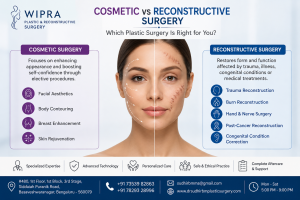
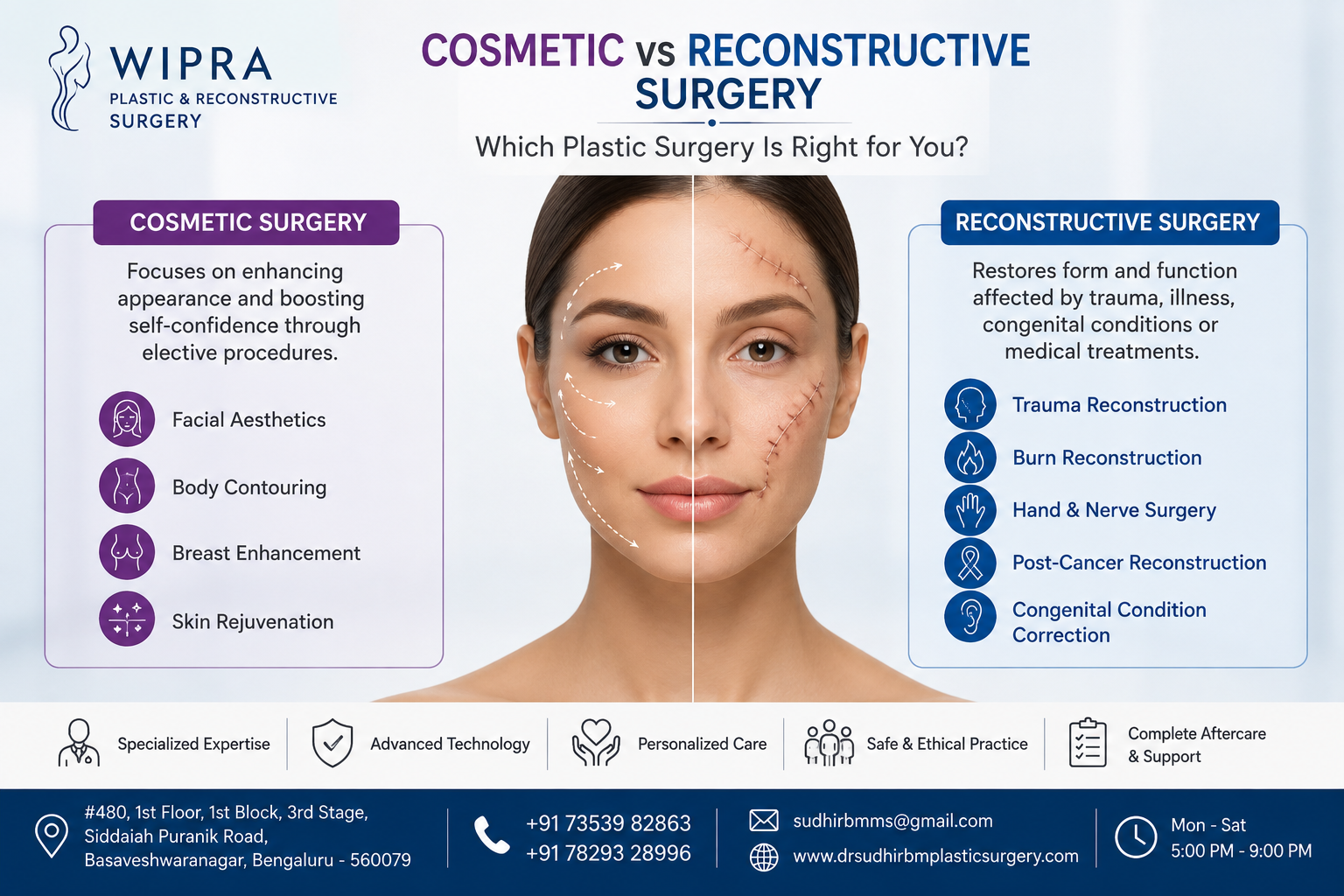
Cosmetic surgery primarily aims to enhance appearance, while reconstructive surgery generally focuses on restoring form and/or function affected by injury, disease, congenital conditions, or other medical circumstances.
Reconstructive surgery is used to repair or rebuild tissue that has been affected by trauma, tumors, infections, burns, or conditions present from birth. The primary objective is usually to restore normal function — such as movement, sensation, or the ability of an organ or body part to work properly — though restoring a more typical appearance is often part of the process as well.
Examples of reconstructive procedures may include:
- Breast reconstruction following cancer treatment
- Burn reconstruction and post-burn deformity correction
- Trauma reconstruction after accidents or injuries
- Scar revision following surgery or injury
- Congenital deformity correction, such as cleft lip and palate
- Soft-tissue reconstruction after tumor removal
- Hand or facial reconstruction, depending on the injury or condition
A reconstructive surgery clinic in Rajajinagar typically works closely with other specialists — oncologists, trauma teams, or pediatricians, for example — since reconstructive cases often arise from a broader medical treatment plan rather than standing alone as an elective choice.
Cosmetic vs Reconstructive Surgery – Key Differences
| Factor | Cosmetic Surgery | Reconstructive Surgery |
| Primary purpose | Enhance appearance | Restore form and/or function |
| Main patient goal | Aesthetic improvement | Recovery of normal structure or function |
| Typical indication | Personal aesthetic preference | Trauma, disease, congenital condition, or prior surgery |
| Functional concerns | Usually minimal or absent | Often central to the procedure |
| Appearance concerns | Primary focus | May be addressed alongside function |
| Examples | Rhinoplasty, facelift, liposuction | Burn reconstruction, breast reconstruction, cleft repair |
| Medical assessment | Suitability and expectation-focused | Often tied to underlying medical or injury history |
| Patient expectations | Aesthetic outcome, individual results vary | Functional improvement, with appearance considered case by case |
This table offers a general overview rather than a strict rulebook — many real-world cases sit between these two columns, which is exactly why individual evaluation matters more than category labels.
When Might Reconstructive Surgery Be Recommended?
Reconstructive surgery may be considered in a range of situations, depending on the patient’s condition and clinical evaluation. These can include:
- Trauma or serious injuries affecting the face, hands, or other body areas
- Burns and the scarring or contractures that can follow
- Congenital differences present from birth, such as cleft lip and palate
- Tumor or cancer surgery that has altered normal tissue
- Significant tissue loss from infection or disease
- Scarring that affects movement or function
- Functional impairment, such as restricted motion or nerve involvement
- Deformity following a previous surgical procedure
It’s important to note that surgery is not automatically required in these situations. Whether reconstructive surgery is appropriate depends on the patient’s condition, the extent of functional or structural impact, and a clinical evaluation by a reconstructive surgeon in Rajajinagar or elsewhere who can review the full medical picture before recommending a course of action.
When Might Cosmetic Surgery Be Considered?
Patients may consider cosmetic surgery for a variety of personal reasons, including:
- Appearance-related concerns they’ve thought about for some time
- Changes in body contour after weight loss or pregnancy
- Facial aesthetic concerns related to aging or proportion
- Symmetry concerns involving the nose, breasts, or other features
- Personal aesthetic goals unrelated to any medical condition
Since cosmetic surgery in Rajajinagar and elsewhere is elective, informed decision-making is especially important. This means understanding potential risks, being realistic about recovery time, and having a clear sense of what a given procedure can and cannot achieve for your specific anatomy. Individual suitability varies, and a good surgeon will tell you honestly if a particular procedure isn’t likely to meet your expectations.
Can Cosmetic and Reconstructive Surgery Overlap?
The line between cosmetic and reconstructive surgery isn’t always sharp. Many procedures involve both functional and aesthetic considerations simultaneously. Eyelid surgery, for instance, may be performed to improve appearance, to correct drooping eyelids that obstruct vision, or both at once. Breast reconstruction after cancer treatment restores form, but the surgeon also considers symmetry and aesthetic outcome as part of the overall plan.
This is because plastic surgery, as a discipline, considers form, function, symmetry, tissue quality, patient goals, and long-term outcomes together, regardless of whether a case is labeled cosmetic or reconstructive. Recognizing this overlap is useful for patients, since it means the “right” category for your case may not be a clean either/or answer — and that’s a normal part of the evaluation process, not a sign of confusion.
How Do You Know Which Type of Plastic Surgery Is Right for You?
There’s no universal answer, but working through the following questions with a plastic surgeon in Rajajinagar can help clarify your situation:
- Why are you considering surgery in the first place?
- Is there a functional problem, such as difficulty moving, seeing, or using a body part?
- Did the concern result from an injury, disease, congenital condition, or a previous surgery?
- Is your goal primarily aesthetic, or is it tied to a medical or functional issue?
- What is your overall health status?
- Do you have existing medical conditions or take medications that could affect surgery or healing?
- What are your expectations for recovery time and process?
- What potential risks and complications are relevant to your case?
- What benefits are realistically expected from the procedure?
- Are there alternative, non-surgical treatment options worth considering first?
- Is this the right time for surgery, given your current health and life circumstances?
Working through these points on your own can be useful, but a consultation with a qualified plastic surgeon remains essential for a proper assessment, since some of these factors — particularly functional versus aesthetic concerns — require a clinical examination to evaluate accurately.
What Happens During a Plastic Surgery Consultation?
A consultation, whether for a cosmetic or reconstructive concern, generally includes:
- A review of your medical history
- A physical examination relevant to your concern
- A discussion of your goals and expectations
- An assessment of the affected anatomy
- An explanation of suitable treatment options
- A discussion of risks and benefits specific to your case
- An outline of what recovery is likely to involve
- Consideration of alternative treatments, where relevant
- Questions about any previous procedures in the area
- Development of an individualized treatment plan
A responsible consultation does not promise a specific outcome. Instead, it should give you a clear, honest picture of what’s possible for your particular case, along with the risks and trade-offs involved.
Why Choosing the Right Plastic Surgeon Matters
Whether your concern is cosmetic, reconstructive, or somewhere in between, the surgeon’s background matters. Look for appropriate medical qualifications, relevant surgical experience, and familiarity with both reconstructive and cosmetic techniques, since these skill sets often inform one another. A plastic and reconstructive surgery specialist in Rajajinagar should be able to explain their training, walk you through your specific case honestly, and support proper informed consent — meaning you understand the procedure, its risks, and its alternatives before agreeing to it.
Equally important is the surgical facility itself: appropriate safety standards, anesthesia protocols, and postoperative care planning all affect how safely a procedure and recovery unfold. Clear, ongoing communication throughout your treatment — not just during the initial consultation — is a meaningful sign of a surgeon who prioritizes patient wellbeing over simply booking procedures.
Questions to Ask Before Choosing Plastic or Reconstructive Surgery
Before deciding on any procedure, consider asking:
- Why is this specific procedure being recommended for me?
- What are my treatment alternatives, surgical or non-surgical?
- What are the potential risks involved?
- What should I expect during recovery, day by day?
- How long might full recovery take?
- What type of follow-up care will I need afterward?
- What happens if complications occur during or after surgery?
- What results are realistic for my specific situation?
- Is this procedure primarily cosmetic, reconstructive, functional, or a combination of these?
Bringing this list to your consultation can help you evaluate the answers more objectively, rather than relying on how confident or reassuring a conversation feels in the moment.
Why Consult a Plastic Surgeon in Rajajinagar?
Patients researching plastic or reconstructive surgery in Rajajinagar can benefit from an in-person consultation, since photographs, online descriptions, and general information can only go so far in assessing an individual case. A physical examination allows a plastic surgeon in Rajajinagar to evaluate your specific anatomy, medical history, and goals directly, which is necessary before any recommendation can be made responsibly.
Being able to consult a surgeon locally in Bengaluru also makes it easier to attend follow-up visits during recovery, which matters for both cosmetic and reconstructive cases. This is a practical consideration rather than a claim that any one location offers inherently superior care — proximity mainly supports consistency of follow-up and easier access if questions arise after the procedure.
Conclusion
Cosmetic surgery primarily focuses on enhancing appearance, while reconstructive surgery focuses on restoring form and, often, function affected by injury, illness, or congenital conditions. Many procedures involve elements of both, which is why categorizing a case isn’t always straightforward. The right choice ultimately depends on your individual condition, health history, and goals, assessed through a proper clinical evaluation rather than general information alone.
If you’re trying to understand whether your concern falls under cosmetic or reconstructive care, or a combination of both, a consultation with Dr. Sudhir BM at a reconstructive surgery clinic in Rajajinagar can help clarify your options. Schedule a consultation to discuss your concerns, treatment options, suitability, expected recovery, and an individualized surgical plan.
Medical information in this article should not replace an in-person consultation with a qualified healthcare professional.
Frequently Asked Questions
- What is the difference between cosmetic and reconstructive surgery?
Cosmetic surgery is primarily aimed at enhancing appearance through elective procedures, while reconstructive surgery focuses on restoring form and/or function affected by trauma, disease, or congenital conditions. Some procedures involve both goals depending on the individual case and clinical findings. - Is reconstructive surgery only for people with injuries?
No. While trauma is one common reason, reconstructive surgery can also address congenital conditions, tumor-related tissue loss, burns, infections, and complications from previous surgeries. The need for reconstructive surgery depends on the individual’s specific medical history and condition. - What conditions can reconstructive plastic surgery treat?
Reconstructive surgery may be considered for conditions such as burns, traumatic injuries, congenital differences like cleft lip and palate, tissue loss after cancer treatment, and functional scarring. Whether it’s appropriate depends on clinical evaluation of the specific condition. - Is cosmetic surgery medically necessary?
Cosmetic surgery is generally elective and not medically necessary in the way reconstructive surgery often is, since it primarily addresses appearance-related goals rather than functional impairment. That said, some procedures can have functional elements depending on the case. - Can plastic surgery improve both appearance and function?
Yes, many procedures address both simultaneously. Eyelid surgery, for example, can improve appearance while also correcting drooping eyelids that obstruct vision, depending on the patient’s specific anatomy and concerns. - How do I know whether I need cosmetic or reconstructive surgery?
This depends on whether your concern stems from a functional or medical issue versus a purely aesthetic goal, along with your health history. A consultation with a qualified plastic surgeon is the most reliable way to determine which category, or combination, applies to you. - What should I ask a plastic surgeon before surgery?
Useful questions include why a procedure is being recommended, what the risks and alternatives are, what recovery will involve, and what results are realistic for your specific case. Bringing a written list to your consultation can help you evaluate the answers more clearly. - How can I find a plastic surgeon in Rajajinagar?
Look for a surgeon with verifiable medical qualifications, relevant experience in the specific procedure you need, and a clinic that offers a thorough consultation process. Wipra Plastic & Reconstructive Surgery, led by Dr. Sudhir BM, serves patients from Rajajinagar and nearby areas of Bengaluru.