
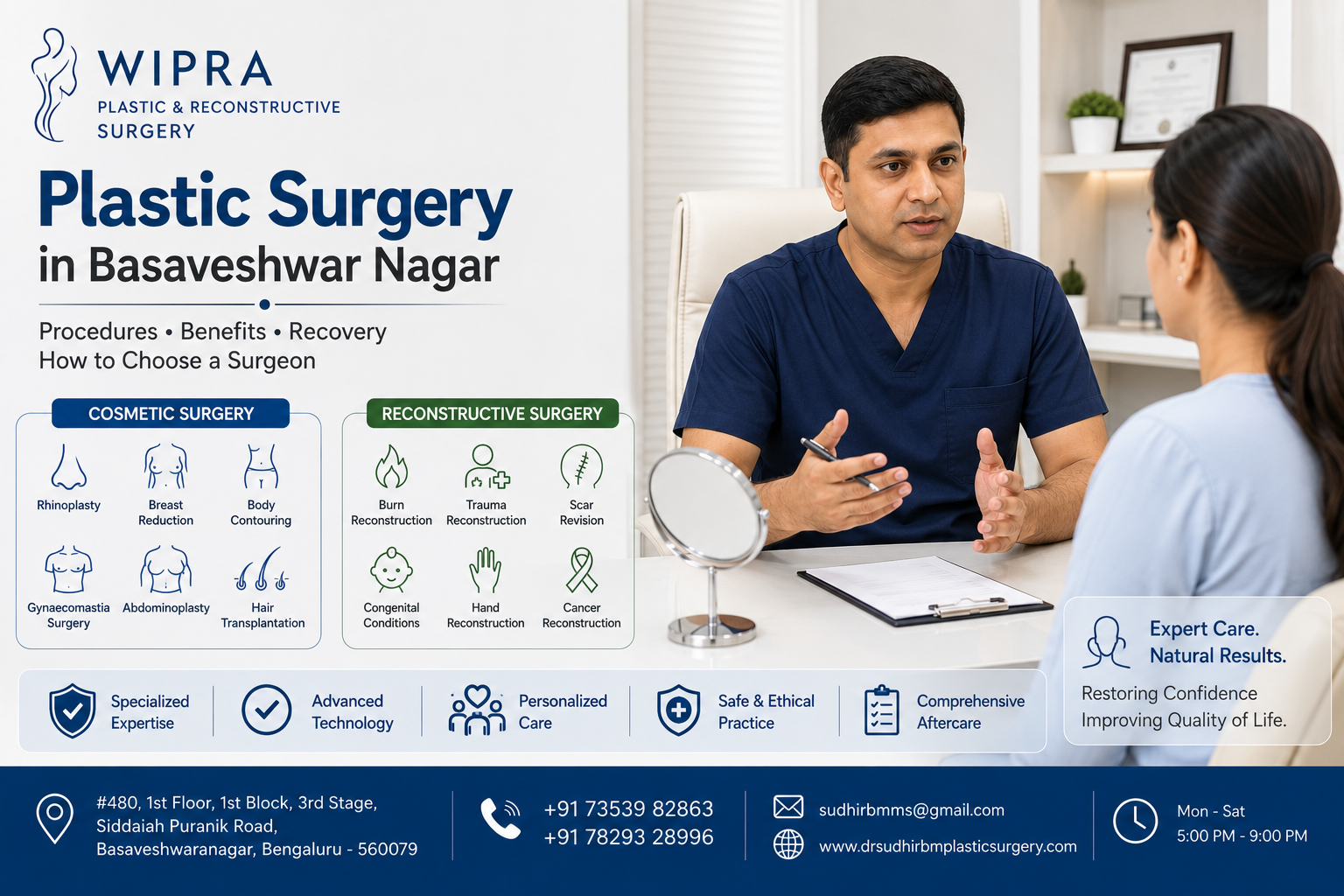

If you’re exploring plastic surgery for the first time, it helps to know that the field covers far more ground than most people assume. It includes both cosmetic procedures, chosen mainly to enhance appearance, and reconstructive procedures, used to restore form or function after trauma, illness, or conditions present from birth. Your goals, health history, and the specific concern you’re addressing all shape which path is relevant to you.
This guide is written for anyone researching a plastic surgery clinic in Basaveshwar Nagar — whether you’re weighing a cosmetic change or need reconstructive treatment following an injury or medical condition. We’ll walk through common procedures, what to expect during recovery, the risks involved, and practical steps for choosing a surgeon you can trust with an honest, unhurried consultation.
What Is Plastic Surgery?
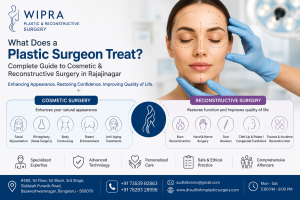
Plastic surgery is a surgical specialty focused on reshaping, repairing, or restoring the body’s tissues. It’s broadly divided into two categories:
- Cosmetic surgery — chosen primarily to change or enhance appearance
- Reconstructive surgery — performed to restore form and/or function after trauma, burns, congenital differences, cancer surgery, scarring, or other physical conditions
Both categories require the same underlying surgical training, and the techniques often overlap. What differs is the primary reason for treatment: an aesthetic goal chosen by the patient, versus a medical need arising from injury or disease. Many patients only need one type of procedure, but some situations call for elements of both.
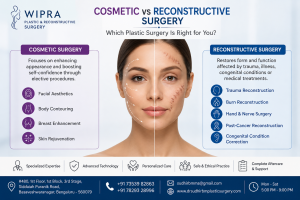
Cosmetic vs Reconstructive Plastic Surgery
| Cosmetic Surgery | Reconstructive Surgery |
| Focuses primarily on appearance | Focuses on restoring form and/or function |
| Usually elective | May follow injury, disease, congenital conditions, or cancer treatment |
| Examples: rhinoplasty, facelift, body contouring | Examples: burn reconstruction, onco-reconstructive surgery, cleft repair |
These categories can overlap in practice. Breast reduction, for instance, is often performed for physical comfort and functional reasons, but it also changes appearance. Reconstructive procedures frequently improve appearance as part of restoring normal structure, even though that isn’t their primary goal. Your surgeon can help clarify which considerations apply most to your specific case.
Common Plastic Surgery Procedures
Rhinoplasty
Rhinoplasty reshapes the nose to address concerns with its size, shape, or proportion relative to the rest of the face. Some patients pursue it for aesthetic reasons, while others combine it with functional correction of breathing-related concerns. Suitability and the achievable outcome depend on the patient’s nasal anatomy and skin characteristics, assessed during consultation.
Breast Reduction
Breast reduction surgery removes excess breast tissue, fat, and skin. It may be considered by patients experiencing physical discomfort — such as back or shoulder strain — related to breast size, as well as those seeking a change in proportion. Whether it’s appropriate depends on individual anatomy and health factors.
Gynaecomastia / Male Breast Reduction
Gynaecomastia refers to enlarged male breast tissue, often related to hormonal factors. In appropriate cases, after evaluation, surgery may be considered to reduce breast tissue and improve chest contour. Not every case of gynaecomastia requires surgical treatment, so assessment is an important first step.
Body Contouring and Abdominoplasty
Body contouring procedures, including abdominoplasty (tummy tuck), address excess skin and fat, often following significant weight changes, pregnancy, or age-related changes in skin elasticity. These procedures reshape the treated area but are not a substitute for weight management, and outcomes vary depending on individual skin quality and tissue characteristics.
Hair Transplantation
Hair transplantation is a surgical option for hair restoration that relocates hair follicles from one area of the scalp to another. Results depend on factors such as donor hair availability, hair type, and the extent of hair loss, so no specific density or coverage outcome can be promised in advance.
Facial Rejuvenation Procedures
Facial rejuvenation covers procedures such as facelift, neck lift, and eyelid surgery, generally addressing signs of facial aging, skin laxity, or drooping eyelids. These procedures may be chosen for aesthetic reasons, or in the case of eyelid surgery, sometimes for functional reasons when drooping skin affects vision.
Reconstructive Procedures
Reconstructive plastic surgery covers a distinct set of needs, including:
- Post-trauma reconstruction — repairing tissue damaged by accidents or injuries
- Burn reconstruction — addressing scarring and contractures following burn injuries
- Onco-reconstructive surgery — reconstructing tissue after tumor removal
- Microvascular reconstruction — used for complex reconstruction involving the head, face, and neck
- Cleft and craniofacial surgery — treating congenital conditions such as cleft lip and palate
Each of these areas requires individualized planning based on the extent and location of the tissue affected.
Who May Consider Plastic Surgery?
Suitability for plastic surgery — cosmetic or reconstructive — depends on several individual factors, including:
- Overall health and any existing medical conditions
- Relevant medical history
- Current medications
- Smoking status, since it can affect healing
- Skin and tissue characteristics
- Personal goals and expectations
- Lifestyle factors that may affect recovery
- The specific procedure being considered
This isn’t a checklist you need to evaluate on your own. A proper consultation, including a physical examination and a review of your health history, is essential before any procedure can be recommended, and your surgeon is best placed to advise whether a given option is appropriate for you.
Benefits of Plastic and Reconstructive Surgery
When appropriate for the individual patient, plastic and reconstructive surgery may offer benefits such as:
- Improved physical appearance or body proportion
- Restoration of tissue and structure after trauma
- Improved function in selected reconstructive cases, such as movement affected by scarring
- Improvement in the appearance of certain scars
- Restoration of form following cancer-related surgery
- Improved confidence for some patients
- A meaningful improvement in quality of life in appropriate cases
It’s worth being clear that these benefits vary from patient to patient, and no outcome can be guaranteed in advance. What’s realistic for you specifically is something your surgeon can only assess after a proper evaluation.
What Happens During a Plastic Surgery Consultation?
A consultation typically involves the following steps:
- Review of your medical history
- Discussion of your goals and concerns
- A physical examination relevant to your case
- Review of current medications and health conditions
- Discussion of suitable treatment options
- Explanation of benefits and limitations
- Discussion of possible risks and complications
- Overview of expected recovery
- Preoperative instructions, if surgery is planned
- An opportunity to ask questions
Being open about your full medical history — including previous surgeries, medications, and lifestyle factors like smoking — helps your surgeon give you accurate, personalized guidance rather than generic advice.
Plastic Surgery Recovery: What Should You Expect?
Recovery after plastic surgery generally involves an initial period of swelling, bruising, and some discomfort, which is typically managed with prescribed medication and specific wound care instructions. Most patients are given activity restrictions for a period following surgery, along with a schedule of follow-up appointments to monitor healing.
Over time, patients gradually return to normal activities, and visible signs like swelling and scarring continue to settle and mature for weeks or months afterward. Following your surgeon’s postoperative instructions closely — including wound care, activity limits, and follow-up visits — plays a significant role in how smoothly recovery proceeds.
There’s no single recovery timeline that applies to everyone. Recovery depends on:
- The specific procedure performed
- The extent of surgery involved
- Your individual health and age
- Your body’s healing response
- Lifestyle factors, including smoking and activity level
- How closely postoperative care instructions are followed
Your surgeon can give you a recovery estimate specific to your procedure and health profile during consultation.
Risks and Considerations of Plastic Surgery
Like any surgical procedure, plastic and reconstructive surgery carries potential risks, which may include:
- Infection
- Bleeding
- Swelling or bruising beyond the expected range
- Scarring
- Pain
- Delayed wound healing
- Changes in skin sensation
- Anesthesia-related risks
- The possibility of needing a revision procedure in selected cases
The specific risks relevant to you depend on the procedure being considered and your individual health profile. A responsible surgeon will discuss these risks openly during your consultation rather than glossing over them, and it’s worth asking direct questions if anything isn’t clear.
How to Choose a Plastic Surgeon in Basaveshwar Nagar
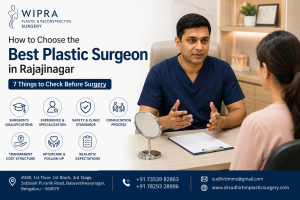
Choosing the right surgeon matters as much as choosing the right procedure. Here’s what to look for.
1. Check Relevant Qualifications
A plastic surgeon in Basaveshwar Nagar should have completed recognized surgical training in plastic and reconstructive surgery, typically an MBBS followed by postgraduate qualifications such as MS and MCh in Plastic Surgery. Appropriate training is the foundation for safe, informed surgical decision-making.
2. Consider Experience Relevant to Your Procedure
Training establishes competence, but experience with your specific procedure shapes practical judgment. Ask how often the surgeon performs the type of surgery you’re considering.
3. Review the Range of Services
Understanding whether a surgeon has experience across both cosmetic and reconstructive procedures can be useful, since these skill sets often complement each other, particularly for cases with both aesthetic and functional elements.
4. Evaluate Communication
A good surgeon should clearly explain your treatment options, expected outcomes, limitations, risks, and recovery process, in language you can actually follow — not just medical shorthand.
5. Ask About Follow-Up Care
Postoperative monitoring plays a real role in catching complications early and supporting smooth healing. Ask what follow-up schedule is typical for your procedure.
6. Avoid Choosing Based Only on Price
Cost is a legitimate factor, but it shouldn’t be the only one. A significantly lower price than typical for a given procedure may reflect gaps in safety standards, anesthesia support, or aftercare.
Patients searching for the best plastic surgeon in Basaveshwar Nagar should compare qualifications, relevant experience, communication, safety standards, and follow-up care, rather than relying on rankings or advertising alone. A plastic and reconstructive surgery specialist in Basaveshwar Nagar who is transparent about these details is generally a more reliable choice than one who leans on promotional claims.
Why Consider a Plastic Surgery Clinic in Basaveshwar Nagar?
Beyond the surgeon’s individual qualifications, the clinic itself matters. A well-run plastic surgery clinic in Basaveshwar Nagar should offer specialist consultation, individualized treatment planning rather than a one-size-fits-all approach, appropriate surgical facilities, thorough preoperative assessment, structured postoperative follow-up, and clear, ongoing communication throughout your treatment. For patients considering both cosmetic and reconstructive concerns, a clinic with expertise across both areas can offer more continuity of care.
Cosmetic and Reconstructive Surgery in Basaveshwar Nagar
Patients in Basaveshwaranagar and nearby parts of Bengaluru consult plastic surgeons for a wide range of reasons — from aesthetic goals at a cosmetic surgery clinic in Basaveshwar Nagar to functional and reconstructive needs at a reconstructive surgery clinic in Basaveshwar Nagar. Whether your concern is appearance-related, tied to an injury or medical condition, or a combination of both, the appropriate next step is the same: an individual consultation where your specific case can be properly assessed rather than generalized from other patients’ experiences.
Why Choose Wipra Plastic & Reconstructive Surgery?
Wipra Plastic & Reconstructive Surgery, located in Basaveshwaranagar, Bengaluru, is led by Dr. Sudhir B. M., who holds qualifications in General Surgery and an MCh in Plastic Surgery. Dr. Sudhir has over 10 years of experience in the field, including training in cosmetic surgery and extensive reconstructive surgery experience involving trauma, burns, and post-tumor reconstruction. He previously headed the Department of Plastic Surgery at Sapthagiri Institute of Medical Sciences, Bangalore, from 2017 to 2022.
This combination of reconstructive and cosmetic training reflects the kind of broad surgical grounding that’s useful across a wide range of patient needs, whether the primary concern is aesthetic, functional, or both. As with any surgeon, the right way to evaluate fit for your specific case is through a direct consultation.
Questions to Ask Before Plastic Surgery
Before deciding on any procedure, it’s worth asking your surgeon:
- What procedure is suitable for my specific concern?
- What are the expected benefits in my case?
- What are the possible risks?
- What alternatives are available, surgical or non-surgical?
- What type of anesthesia may be used?
- How long might recovery take for my situation?
- What activity restrictions should I expect?
- What follow-up care will I need?
- What should I do to prepare before surgery?
- What results are realistic for someone with my anatomy and health profile?
Writing these down and bringing them to your consultation can help you compare information more clearly, rather than relying on memory afterward.
Frequently Asked Questions
- What does a plastic surgeon do?
A plastic surgeon performs both cosmetic procedures, aimed at enhancing appearance, and reconstructive procedures, aimed at restoring form or function after trauma, illness, or congenital conditions. The specific treatment depends on the patient’s individual concern and goals. - What is the difference between cosmetic and reconstructive surgery?
Cosmetic surgery is usually elective and focused on appearance, while reconstructive surgery addresses form and function following injury, disease, or congenital conditions. Some procedures involve elements of both, depending on the individual case. - How do I choose a plastic surgeon in Basaveshwar Nagar?
Look for verified surgical qualifications, relevant experience with your specific procedure, clear communication about risks and outcomes, and a defined plan for follow-up care. Comparing these factors is more reliable than comparing price or advertising alone. - How long does plastic surgery recovery take?
Recovery time varies significantly depending on the procedure, its extent, and individual factors like age and healing response. Your surgeon can give you a realistic recovery estimate specific to your procedure during consultation. - Is plastic surgery safe?
No surgical procedure is entirely without risk, but risks can be minimized when the procedure is performed by a qualified surgeon following appropriate safety protocols. Individual risk also depends on your overall health, so a thorough evaluation beforehand matters. - What procedures are available at a plastic surgery clinic in Basaveshwar Nagar?
Procedures commonly offered can include rhinoplasty, breast reduction, gynaecomastia surgery, body contouring, abdominoplasty, hair transplantation, and reconstructive procedures such as burn and trauma reconstruction. Availability should be confirmed directly with the clinic. - When should I consider reconstructive surgery?
Reconstructive surgery may be considered following trauma, burns, congenital conditions, or tissue loss after cancer treatment, when the goal is to restore form or function. Whether it’s appropriate for your case depends on clinical evaluation. - How should I prepare for a plastic surgery consultation?
Bring a clear description of your concern, a list of current medications, relevant medical history, and any previous treatment records. Preparing specific questions in advance can also help you get the most out of the appointment. - Can plastic surgery improve both appearance and function?
Yes, some procedures address both simultaneously. Eyelid surgery, for example, can improve appearance while also correcting drooping eyelids that affect vision, depending on the individual case. - What should I ask a plastic surgeon before surgery?
Useful questions include why a specific procedure is recommended, what the risks and alternatives are, what recovery involves, and what results are realistic for your case. A written list of questions can help you evaluate the consultation more objectively.
Conclusion
Plastic surgery covers both cosmetic and reconstructive care, and the right approach depends entirely on your individual concern, health history, and goals. Recovery and outcomes vary from patient to patient, which is why choosing a surgeon with appropriate qualifications and relevant experience matters as much as choosing the right procedure. Understanding the risks and having realistic expectations are just as important as understanding the potential benefits.
If you’re researching a plastic surgery clinic in Basaveshwar Nagar and want to discuss your specific concerns, consider scheduling a consultation with Dr. Sudhir B. M. at Wipra Plastic & Reconstructive Surgery to talk through your options, suitability, and what to expect.